


Image:
Diakonia for Missionary Discipleship Formation.
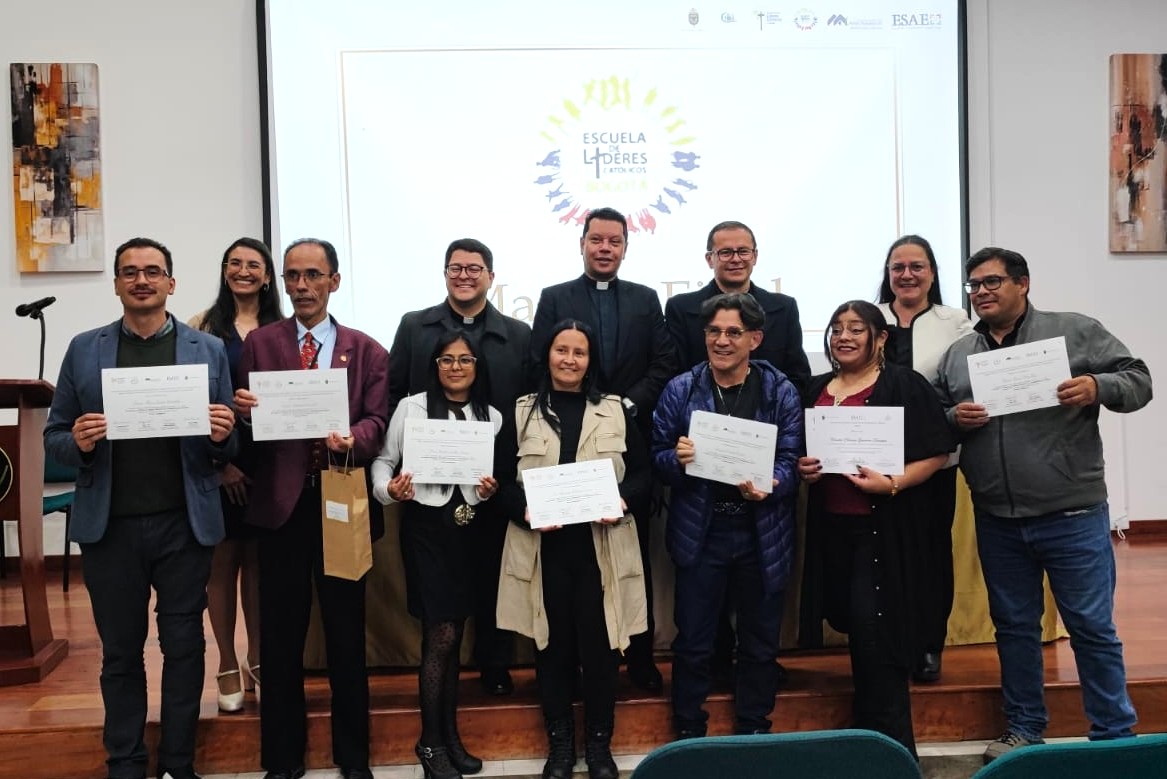
On November 14, at the auditorium of Fundación Universitaria Monserrate – Unimonserrate, the Archdiocese of Bogotá held the certification ceremony for the seventh cohort of the Catholic Leaders’ School, a formative space that accompanies and encourages the vocation of service of hundreds of lay people in a spirit of Gospel living, synodality, and civic commitment.
Image:
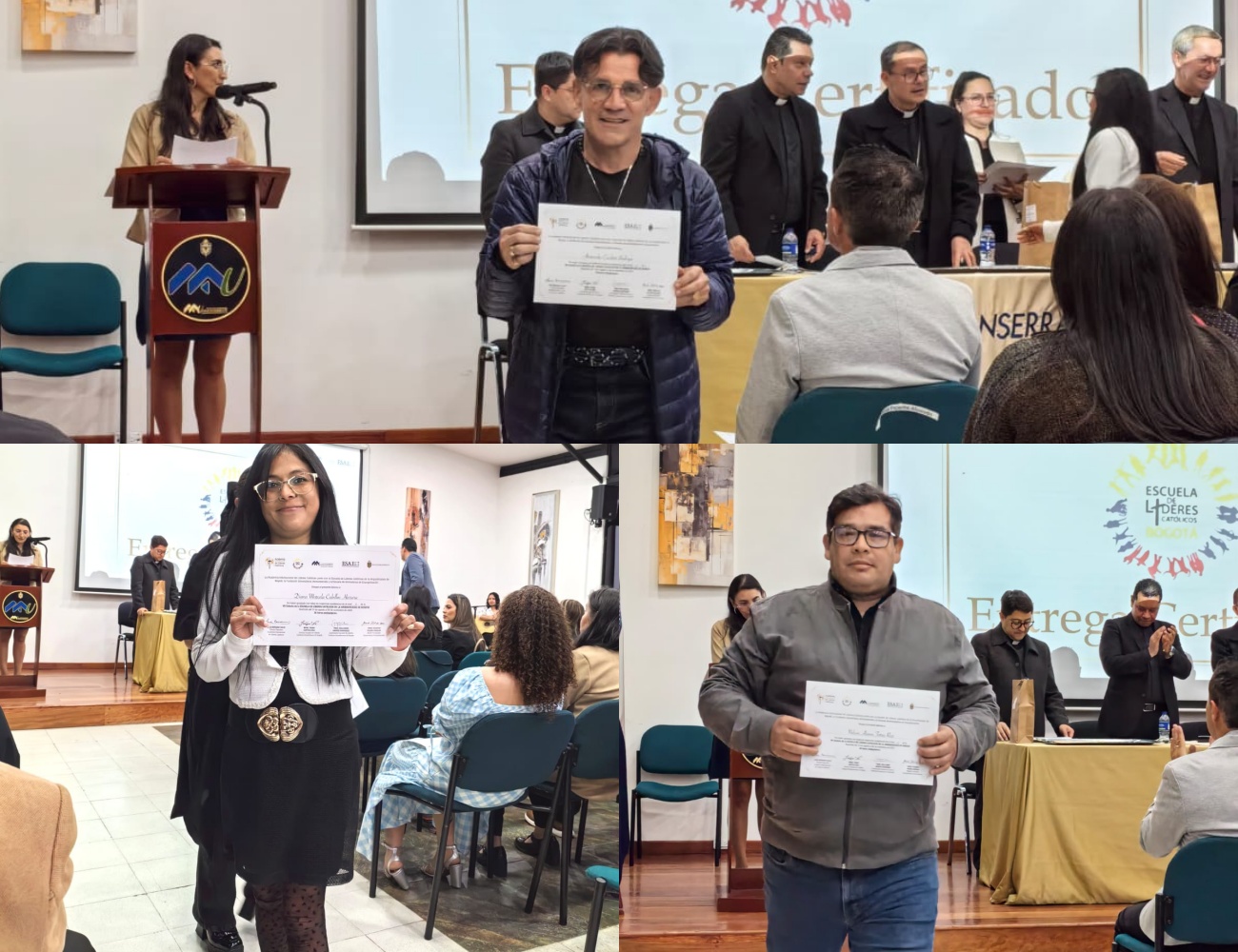
Fifty-two leaders—men and women of different ages, professions, and life situations—successfully completed Levels 1, 2, and 3 of the School and were certified in a warm and heartfelt ceremony, together with their families, professors, administrators, and friends, who have been an essential part of their journey.
Image:
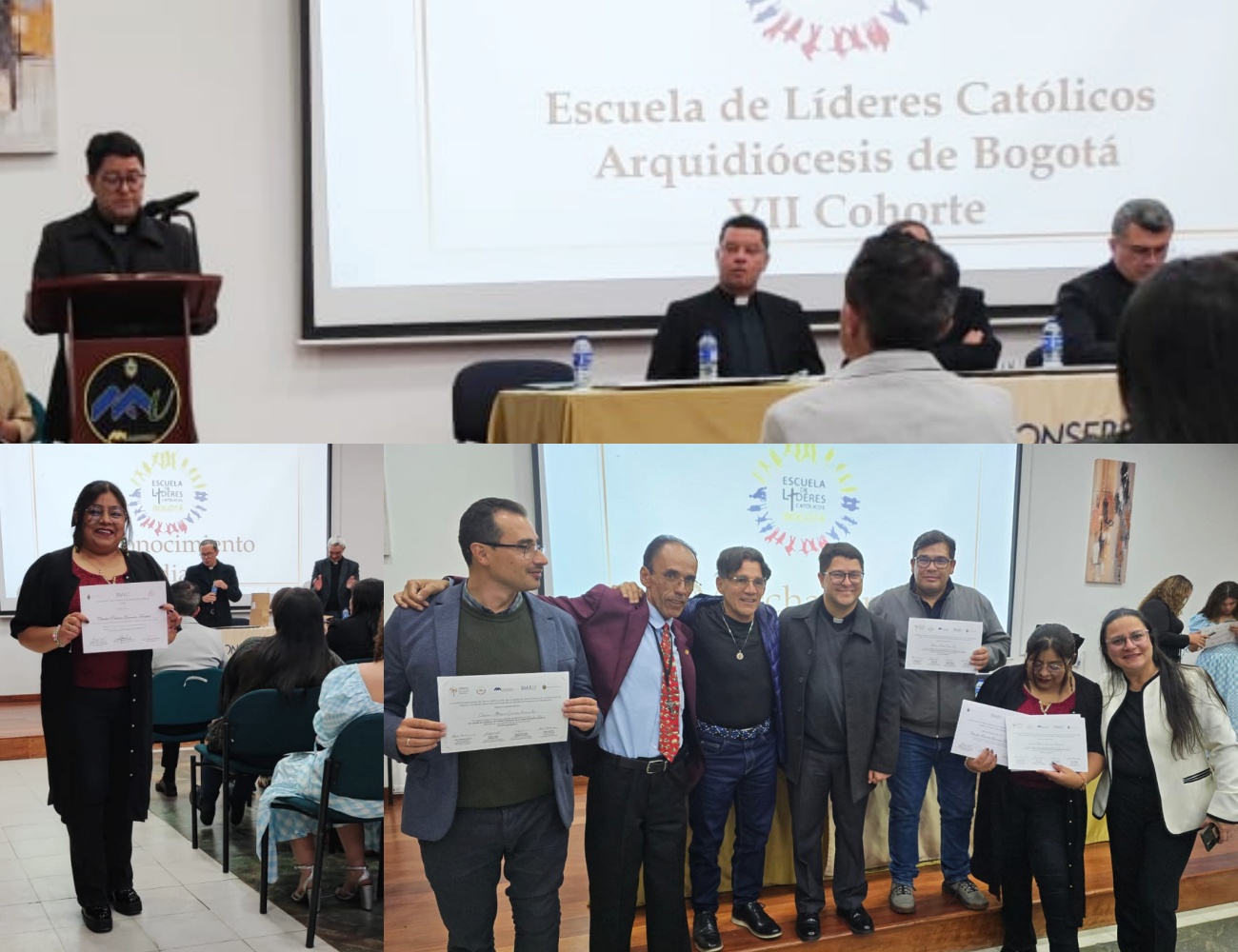
Father Guillermo Andrés Rodríguez, coordinator of the School, presided over the certification ceremony, accompanied by Monsignor Germán Barbosa, Auxiliary Bishop of Bogotá; Monsignor Yoany Cupitra Díaz, Vicar of the Diakonia for Missionary Discipleship Formation and Director of the School; Monsignor Ricardo Pulido, Vicar of the Diakonia for Integral Human Development and Rector of Unimonserrate; and Father Nicolás Francisco Garzón Reyes, Director of the School of Evangelization Animators (ESAE). This presence and coordinated work are a clear sign of the Archdiocese’s commitment to a Church that forms, accompanies, and sends.
“Our School Is a Seed of Hope”
In his remarks, Father Guillermo highlighted the pastoral coordination that supports this initiative, noting that “these seven cohorts would not be possible if we did not work in communion with the Diakonia for Missionary Discipleship Formation, the Diakonia for Integral Human Development, the Diakonia for Hope, the Territorial Episcopal Vicariates, the parishes, the Seminary, the permanent diaconate, Fundación Universitaria Unimonserrate, and the various service initiatives and foundations of our Archdiocese.”
“We are,” he added, “witnesses to the immense richness of the Catholic Church in Bogotá, and we seek to make our bonds more authentic each day. Coordination is a fundamental element of our School.”
Drawing on his experience and the history of these seven cohorts, he then presented six reasons why the Catholic Leaders’ School is a real and fruitful sign of hope:
1. Formation rooted in the Social Doctrine of the Church (SDC)
The SDC, he emphasized, sheds light on social reality through the Gospel and commits lay people to be prophets of hope, especially among the most vulnerable. “Christian social thought reveals the drama we are living, but also how the truth of the Gospel is capable of illuminating and giving hope to concrete men and women.”
2. Leaders who work for the common good
From the Gospel and active citizenship, graduates are sent forth to promote processes that dignify life and build community. “We will be blessed if we work for the good of all.”
3. Fraternity as a way of life
The School is a laboratory of authentic relationships: from virtual spaces to in-person encounters, students experience that fraternity is born of the Risen Christ and becomes visible in service and encounter.
4. Concrete people with concrete stories
“Every man and every woman formed here is a seed of hope.”
Over five years, the School has accompanied 286 people, with the support of 36 professors and 36 witnesses per semester, who offer their time, faith, and life experience.
5. A synodal project that brings together the whole Church
Father Guillermo acknowledged the generosity of the various diakonias, territorial vicariates, parishes, the Seminary, the permanent diaconate, educational institutions, and foundations. “This would not be possible if we did not walk together,” he affirmed.
6. Commitment to civic participation
The recent accompaniment of young people in the elections for the Local Youth Councils was a significant milestone. Today, the School celebrates having a presence in five localities (Usaquén, Mártires, Puente Aranda, Rafael Uribe Uribe, and Tunjuelito), through the Semillas de Futuro Foundation, directed by permanent deacon Rafael Guzmán.
These young people belong to different ecclesial settings: the parish of Our Lady of Las Lajas and several schools of the Archdiocesan Educational System of Bogotá (SEAB), such as Liceo Parroquial San José and Fundación Instituto Tecnológico del Sur (FITS). They “are a clear sign that formation opens the doors to the transformation of territories.”
He concluded his address with an inspiring invitation:
“May the Lord turn us into cultivators of the seeds of the Gospel, and may our School continue to be an instrument for cultivating faith.”
An International Voice Encouraging the Journey
The ceremony also received a special message from Chile. Lara Bersano, Executive Director of the International Academy of Catholic Leaders, sent a greeting filled with gratitude and missionary encouragement.
She congratulated the Archdiocese of Bogotá, Unimonserrate, the ESAE, the School’s team, and especially the graduates:
“Today you are true missionary disciples. You hold in your hands the responsibility of carrying this mission forward in a year as special as Jubilee 2025. Hope does not disappoint: we set out to create a better Bogotá, a better Colombia, a better Latin America.”
A Community That Accompanies, Forms, and Sends
The Catholic Leaders’ School is today a living project sustained by 33 teachers and 36 witnesses—missionary disciples and engaged citizens—who share their experience in pastoral ministries, foundations, dialogue forums, and spaces for local and district civic participation.
The ceremony concluded with the presentation of a small gift to the graduates and the missionary sending forth to continue being and sowing seeds of hope, called to promote reconciliation, dialogue, and social peace in this city-region, which so greatly needs leadership in the style of Jesus.
This news item was published by El Catolicismo, the official media outlet of the Archdiocese of Bogotá. You can read the full article at the following link: Read the article here.